

What is a dedicated server is a question that often comes up when a website or application starts to grow beyond basic limits. At this stage, speed, stability, and control become more important than just low cost.
This guide explains dedicated servers in a simple and friendly way. Even without deep technical knowledge, you will understand how they work, why they matter, and when they are the right choice.
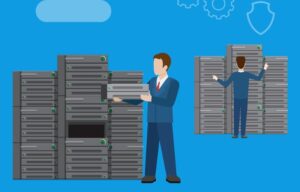
{gambar/ilustrasi: dedicated server overview}
Introduction to Dedicated Servers
A dedicated server is a hosting solution where one physical server is used by only one customer. All hardware resources are fully reserved and not shared with anyone else.
This setup helps websites and applications run more smoothly. Performance stays stable even during traffic spikes or heavy workloads.
Dedicated servers are commonly used by businesses, large websites, and critical online systems.
What Is a Dedicated Server?
What is a dedicated server in simple explanation
A dedicated server is a powerful computer that runs continuously inside a professional data center. You rent this server from a hosting provider and use it exclusively.
No other websites or applications share the same machine. This means full access to CPU, RAM, storage, and bandwidth without competition.
{gambar/ilustrasi: physical dedicated server rack}
How a Dedicated Server Works
Dedicated servers are hosted in data centers with strong infrastructure. These facilities provide stable electricity, cooling systems, and high-speed internet connections.
The hosting provider maintains the hardware. You manage the software, including operating systems, applications, and security settings.
Access is done remotely, allowing full control anytime and from anywhere.
Dedicated Hosting vs Shared Hosting
Shared hosting places many websites on a single server. All users share the same hardware resources, including CPU and memory.
This makes shared hosting affordable, but performance can drop when one site consumes too many resources.
Dedicated hosting removes this issue by allocating the entire server to one user.
Key Differences Between Shared and Dedicated Hosting
-
Shared hosting
-
Low cost
-
Limited control
-
Performance can fluctuate
-
-
Dedicated hosting
-
Higher cost
-
Full control
-
Stable and predictable performance
-
Shared hosting fits small projects. Dedicated servers are designed for growth.
Dedicated Server vs VPS Hosting
VPS hosting uses virtualization to divide one physical server into multiple virtual machines. Each VPS has its own environment.
However, hardware resources are still shared behind the scenes. If one VPS uses too much CPU, others may be affected.
Dedicated servers eliminate this limitation completely.
Why Dedicated Servers Are More Powerful Than VPS
- No virtualization overhead
- No competition for hardware
- Direct access to server resources
For resource-intensive applications, dedicated servers provide noticeable performance improvements.
Dedicated Server vs Cloud Hosting
Cloud hosting uses a network of connected servers. It focuses on flexibility and quick scalability.
Dedicated servers focus on consistent power, isolation, and control.
Simple Comparison Overview
-
Cloud hosting
-
Easy scaling
-
Shared infrastructure
-
Usage-based pricing
-
-
Dedicated hosting
-
Fixed resources
-
Full isolation
-
Predictable performance
-
Both are useful. The right option depends on workload stability and long-term needs.
Core Components of a Dedicated Server
Understanding server hardware helps you choose the right configuration.
CPU (Processor)
The CPU handles all calculations and system tasks.
Dedicated servers typically use enterprise processors such as:
- Intel Xeon
- AMD EPYC
More cores help with multitasking. Higher clock speed improves processing speed.
{gambar/ilustrasi: server cpu processor}
RAM (Memory)
RAM affects how many processes can run smoothly at the same time.
Common configurations include:
- 16 GB for small workloads
- 32–64 GB for business applications
- 128 GB or more for heavy systems
More RAM improves stability and responsiveness.
Storage Options
Storage type impacts speed and data access.
Popular options include:
- HDD for large storage needs
- SSD for faster performance
- NVMe for ultra-fast data access
Most modern dedicated servers use SSD or NVMe storage.
Bandwidth and Network
Dedicated servers usually include high bandwidth limits and dedicated network ports.
This ensures fast data transfer, low latency, and stable connections for users worldwide.
What Is a Bare Metal Server?
A bare metal server is another term for a dedicated server. It highlights that there is no virtualization layer between hardware and operating system.
This direct setup allows applications to run at full hardware capacity.
Benefits of Bare Metal Servers
- Maximum performance
- Lower latency
- Direct hardware control
Bare metal servers are popular in enterprise and performance-critical environments.
Main Benefits of Dedicated Hosting
Dedicated hosting offers advantages that shared and VPS hosting cannot match.
High and Stable Performance
All server resources belong to a single user.
This leads to:
- Faster loading times
- Stable response speed
- Better user experience
Performance remains consistent even during peak traffic.
Full Control and Customization
Dedicated servers allow deep customization.
You can choose:
- Operating system
- Software stack
- Security configuration
This flexibility supports custom applications and complex setups.
Enhanced Security
Dedicated servers provide better isolation.
There are no unknown users sharing the system, which reduces security risks significantly.
You control access rules, firewall settings, and security tools.
Reliable Uptime
Dedicated servers offer predictable uptime.
There are no “noisy neighbors” that can suddenly consume resources.
This reliability is critical for business operations.
Long-Term Scalability
Dedicated servers support gradual upgrades.
You can add more RAM, storage, or upgrade the CPU as your needs grow.
This makes them suitable for long-term projects.
Common Use Cases for Dedicated Servers
Dedicated servers are ideal for specific scenarios where performance matters.
High-Traffic Websites
Large blogs, news portals, and eCommerce platforms require stable hosting.
Dedicated servers handle thousands of visitors without slowdowns.
Business and Enterprise Applications
Systems such as ERP and CRM depend on reliability.
Dedicated hosting ensures consistent access and performance.
Online Game Servers
Games require low latency and fast processing.
Dedicated servers provide smoother gameplay and better player experience.
Streaming and Media Platforms
Streaming platforms need high bandwidth and fast storage.
Dedicated servers support smooth video and audio delivery.
Data Processing and Analytics
Big data workloads require powerful CPUs and large memory.
Dedicated servers handle analytics tasks efficiently.
Managed vs Unmanaged Dedicated Server
Choosing between managed and unmanaged hosting affects how much responsibility you carry.
Both options use the same hardware. The difference is who handles daily server management.
Managed Dedicated Server
With a managed dedicated server, the provider takes care of technical tasks.
This usually includes:
- Operating system updates
- Security patches
- Server monitoring
- Basic troubleshooting
This option is suitable for businesses without a dedicated IT team.
Unmanaged Dedicated Server
An unmanaged dedicated server gives you full control.
You are responsible for:
-
Server setup
-
Software installation
-
Security configuration
This option is more affordable but requires technical knowledge and experience.
Operating System Options for Dedicated Servers
Dedicated servers support multiple operating systems.
The choice depends on application requirements and team experience.
Linux Dedicated Server
Linux is the most popular choice for dedicated hosting.
Common distributions include:
- Ubuntu
- Debian
- CentOS
Linux is stable, secure, and cost-effective for most use cases.
Windows Dedicated Server
Windows Server is used for specific technologies.
It is suitable for:
- ASP.NET applications
- Microsoft SQL Server
- Windows-based enterprise software
Windows hosting includes additional licensing costs.
Dedicated Server Security Best Practices
Even though dedicated servers offer strong isolation, security remains critical.
A well-configured server reduces risks significantly.
Firewall Configuration
Firewalls control incoming and outgoing traffic.
Only open ports that are truly needed.
Blocking unused ports helps prevent unauthorized access.
Regular System Updates
Outdated software is a common security risk.
Always update:
- Operating system
- Server software
- Installed applications
Updates help protect against known vulnerabilities.
Monitoring and Alerts
Monitoring tools track server performance and activity.
They help detect unusual behavior early.
Early alerts allow quick action before serious problems occur.
Backup Strategy
Backups protect your data from unexpected events.
Good backup practices include:
- Regular scheduling
- Off-server storage
- Easy recovery process
Backups are essential for business continuity.
Dedicated Server Pricing Explained
Dedicated server pricing varies widely.
Costs depend on hardware, services, and provider location.
Factors That Affect Dedicated Server Cost
Several elements influence pricing:
- CPU type and core count
- Amount of RAM
- Storage type and capacity
- Bandwidth allocation
- Managed or unmanaged service
Higher specifications mean higher monthly costs.
Typical Dedicated Server Price Range
Most dedicated servers fall into these ranges:
- Entry-level: $80–$150 per month
- Mid-range: $150–$300 per month
- Enterprise-grade: $300+ per month
The investment is justified by performance and reliability.
When Should You Choose a Dedicated Server?
A dedicated server is not always the first step.
It becomes the right choice when growth demands more power.
Signs You Need a Dedicated Server
Consider upgrading if:
- Your website experiences frequent slowdowns
- VPS resources feel limited
- Traffic increases consistently
- Security requirements become stricter
These signs indicate shared resources are no longer enough.
Dedicated Servers and SEO Performance
Website speed plays an important role in SEO.
Search engines prioritize fast and stable websites.
How Dedicated Servers Help SEO
Dedicated servers improve:
- Page loading speed
- Server response time
- Core Web Vitals scores
Better performance leads to improved user experience and rankings.
Dedicated Server vs Colocation
Colocation and dedicated hosting are often compared.
Both use data centers, but ownership differs.
Key Differences
-
Colocation
-
You own the hardware
-
Higher upfront cost
-
Full hardware responsibility
-
-
Dedicated hosting
-
Hardware is rented
-
No upfront hardware cost
-
Easier maintenance
-
Dedicated hosting is simpler for most businesses.
Common Myths About Dedicated Servers
There are many misconceptions about dedicated hosting.
Let’s clear up a few common ones.
“Dedicated servers are only for large companies”
This is not true.
Many startups and growing websites use dedicated servers once traffic increases.
“Dedicated hosting is outdated”
Dedicated servers are still widely used.
Modern bare metal servers support today’s high-performance applications.
“Dedicated servers are difficult to manage”
Managed services make dedicated hosting accessible.
You don’t need deep technical skills to use them effectively.
The Role of Bare Metal Servers in Modern Infrastructure
Bare metal servers are evolving alongside cloud technology.
Many companies now use hybrid setups.
Hybrid Infrastructure Explained
Hybrid setups combine:
- Cloud hosting for flexibility
- Dedicated servers for performance
This approach offers the best of both worlds.
The Future of Dedicated Servers
Dedicated servers continue to improve with new technology.
They remain relevant in modern hosting environments.
Key Trends to Watch
- Faster NVMe storage
- High-core-count CPUs
- Better network speeds
- Integration with cloud platforms
Dedicated servers are adapting, not disappearing.
Final Thoughts on Dedicated Servers
Understanding what is a dedicated server helps you make better hosting decisions.
Dedicated servers offer strong performance, full control, and reliable security.
They are ideal for serious projects that require consistency and long-term stability.
While they cost more than shared or VPS hosting, the benefits often outweigh the price.
Dedicated Server Architecture Explained Simply
Many people feel confused when hearing about server architecture. In reality, the concept is quite simple when explained clearly.
A dedicated server works like a private house. Everything inside belongs only to you, not shared with neighbors.
Core Architecture of a Dedicated Server
A dedicated server consists of several main layers that work together.
These layers include:
- Physical hardware
- Operating system
- Applications
- Network connectivity
Each layer plays an important role in overall performance.
{gambar/ilustrasi: dedicated server architecture diagram}
Physical Layer Explained
The physical layer includes the actual machine inside a data center.
It consists of:
- CPU
- RAM
- Storage drives
- Network cards
Because the hardware is exclusive, performance remains consistent.
Software Layer Explained
On top of the hardware sits the operating system.
This layer allows you to:
- Install applications
- Manage users
- Configure security
You have full control over how this layer is configured.
Dedicated Server Performance Metrics (Easy Explanation)
Performance metrics sound technical, but the idea behind them is simple.
They help measure how well a server handles tasks.
CPU Performance
CPU performance affects how fast tasks are processed.
Important factors include:
- Number of cores
- Clock speed
- CPU generation
More demanding applications benefit from stronger CPUs.
Memory Usage
RAM usage shows how many processes can run smoothly.
When memory is limited:
- Applications slow down
- Errors may appear
Dedicated servers reduce this risk by offering large RAM capacity.
Disk Speed and IOPS
Disk speed controls how fast data is read and written.
Higher disk speed results in:
- Faster website loading
- Better database performance
NVMe storage offers the best performance today.
Network Latency
Latency measures how fast data travels between users and the server.
Lower latency means:
- Faster response times
- Better user experience
Dedicated servers usually provide strong network performance.
Dedicated Server for Different Industries
Different industries use dedicated servers for different reasons.
Below are common examples.
Dedicated Servers for E-Commerce
Online stores need stability and speed.
Dedicated servers help by:
- Handling traffic spikes
- Securing customer data
- Improving checkout speed
This leads to better conversions.
Dedicated Servers for Finance and Banking
Financial systems require strong security.
Dedicated servers offer:
- Full isolation
- Custom security controls
- Compliance flexibility
This makes them suitable for sensitive transactions.
Dedicated Servers for Media and Content Platforms
Media websites serve large files.
Dedicated servers support:
- High bandwidth
- Fast storage
- Stable streaming
This ensures smooth content delivery.
Dedicated Servers for SaaS Businesses
SaaS platforms need reliability.
Dedicated servers provide:
- Predictable performance
- Custom application stacks
- Better user experience
Many SaaS companies start with dedicated hosting.
Dedicated Servers for Education Platforms
Online learning platforms need uptime.
Dedicated servers support:
- Video streaming
- Multiple users
- Secure access
This ensures learning runs smoothly.
Dedicated Server Migration Guide (Beginner Friendly)
Moving to a dedicated server may feel intimidating.
With proper steps, the process becomes manageable.
Step 1: Evaluate Current Hosting Limits
Identify current problems such as:
- Slow loading
- Resource limits
- Frequent downtime
These signs indicate readiness for a dedicated server.
Step 2: Choose the Right Server Specs
Select hardware based on:
- Traffic size
- Application type
- Storage needs
Avoid overpaying for unused resources.
Step 3: Prepare the New Server
Before migration:
- Install OS
- Configure security
- Set up applications
Testing at this stage prevents issues later.
Step 4: Migrate Data Carefully
Data migration should be planned.
Best practices include:
- Backup everything
- Test migration on staging
- Verify data integrity
This reduces downtime risk.
Step 5: Go Live and Monitor
After migration:
- Monitor performance
- Check logs
- Test user access
Fine-tuning improves stability.
Common Dedicated Server Mistakes to Avoid
Many beginners make similar mistakes.
Avoiding them saves time and money.
Choosing Specs Based on Price Only
Cheap servers may lack performance.
Always balance cost with actual needs.
Ignoring Security Setup
Leaving default settings is risky.
Security should be configured from day one.
Skipping Monitoring Tools
Without monitoring, problems go unnoticed.
Monitoring helps detect issues early.
No Backup Strategy
Backups are often forgotten.
Without backups, data loss can be catastrophic.
Dedicated Server Buying Guide (Checklist)
This checklist helps you choose wisely.
Hardware Checklist
- CPU cores match workload
- Sufficient RAM
- SSD or NVMe storage
- Reliable network speed
Service Checklist
- Data center location
- Uptime guarantee
- Support availability
- Managed or unmanaged option
Business Checklist
- Budget planning
- Growth projection
- Security requirements
A clear checklist prevents poor decisions.
Dedicated Server FAQs
This section answers common questions in simple terms.
Is a dedicated server expensive?
Dedicated servers cost more than shared hosting.
However, they provide better performance and reliability.
Do I need technical skills?
Not always.
Managed dedicated servers handle most technical tasks for you.
Can I upgrade later?
Yes.
Most providers allow upgrades for RAM, storage, and CPU.
Is a dedicated server better than cloud hosting?
It depends.
Dedicated servers offer stability, while cloud hosting offers flexibility.
Is what is a dedicated server suitable for small businesses?
Yes, especially when traffic and performance demands grow.
Final Expansion: Why Dedicated Servers Still Matter
Some people believe cloud hosting replaces everything.
In reality, dedicated servers still play a vital role.
Dedicated Servers in Hybrid Systems
Many companies combine:
-
Cloud services
-
Dedicated servers
This hybrid approach balances flexibility and performance.
Long-Term Cost Efficiency
For steady workloads, dedicated servers can be more cost-effective.
Fixed pricing helps budgeting.
Dedicated Server Capacity Planning Made Simple
Capacity planning means preparing server resources based on future needs.
Many beginners skip this step, which leads to wasted budget or poor performance.
Dedicated servers allow better planning because resources are fixed and predictable.
Why Capacity Planning Matters
Without planning, you may face:
- Slow performance
- Unexpected crashes
- Unnecessary upgrade costs
Good planning helps avoid these problems early.
Key Elements to Plan
When planning a dedicated server, consider:
- Expected traffic growth
- Application complexity
- Storage expansion
This helps choose the right server size from the start.
{gambar/ilustrasi: server capacity planning}
Dedicated Server for Website Growth Stages
Websites grow in stages, and hosting needs change over time.
Dedicated servers usually fit the later growth stages.
Early Growth Stage
At this stage:
-
Traffic is moderate
-
Content is growing
VPS or shared hosting may still work.
Scaling Stage
When traffic increases daily:
-
Performance becomes critical
-
Downtime affects revenue
This is where a dedicated server becomes relevant.
Mature Stage
Large websites require:
- Stable infrastructure
- High security
- Predictable performance
Dedicated hosting supports long-term stability.
Dedicated Server and Data Privacy Compliance
Data privacy is becoming more important worldwide.
Dedicated servers help meet compliance requirements more easily.
Why Dedicated Servers Support Compliance
Dedicated servers offer:
- Full data isolation
- Custom security policies
- Controlled access
This helps with regulations like GDPR or local data laws.
Industry Examples
Industries that benefit include:
- Finance
- Healthcare
- Education
They often require strict data handling standards.
{gambar/ilustrasi: data privacy server}
Dedicated Server Monitoring Explained Simply
Monitoring helps you understand what happens on your server.
It prevents problems before they become serious.
What Should Be Monitored
Key metrics include:
- CPU usage
- Memory usage
- Disk space
- Network traffic
Monitoring tools track these automatically.
Benefits of Monitoring
With monitoring, you can:
- Detect issues early
- Improve performance
- Reduce downtime
This keeps services running smoothly.
Dedicated Server Maintenance Basics
Even powerful servers need maintenance.
Basic tasks keep systems healthy and secure.
Routine Maintenance Tasks
Important tasks include:
- System updates
- Log checking
- Backup verification
Regular maintenance prevents long-term issues.
Managed vs Self Maintenance
Managed hosting handles this for you.
Self-managed servers require manual effort and experience.
Extended Dedicated Server FAQ (SEO)
This section targets long-tail SEO queries.
Is what is a dedicated server suitable for beginners?
Yes, especially with managed services.
Beginners can focus on business instead of technical tasks.
Can a dedicated server handle sudden traffic spikes?
Yes, within its hardware limits.
Dedicated resources handle spikes better than shared environments.
How long does setup take?
Setup usually takes:
A few hours for standard servers
Up to one day for custom setups
Providers handle provisioning.
Can I host multiple websites?
Yes.
A dedicated server can host many websites efficiently.
Is dedicated hosting worth the cost?
For growing projects, yes.
Performance and reliability often justify the investment.
Final Reinforcement: Why Dedicated Servers Remain Relevant
Despite cloud popularity, dedicated servers still matter.
They offer control and stability that shared systems cannot.
Dedicated Servers for Long-Term Projects
Projects with steady workloads benefit most.
Fixed resources make planning and budgeting easier.
Hybrid Future Outlook
Many businesses now combine:
Dedicated servers
Cloud services
This hybrid approach maximizes flexibility and performance.
Dedicated Server for Long-Term Business Stability
Many businesses choose dedicated servers not only for performance, but also for long-term stability. When systems grow, predictability becomes more important than flexibility.
Dedicated servers offer fixed resources. This makes planning easier and reduces unexpected technical issues.
Predictable Performance Over Time
With a dedicated server, performance does not change randomly.
There are no other users competing for CPU, memory, or storage. This consistency is important for businesses that rely on daily online operations.
Stable performance also helps teams focus on growth instead of troubleshooting.
Easier Cost Forecasting
Dedicated hosting usually comes with fixed monthly pricing.
This makes budgeting simpler because:
- Costs are predictable
- No sudden usage spikes
- Clear long-term planning
For steady workloads, this model is often more efficient than pay-as-you-go hosting.
Better Control for Business-Critical Systems
Business-critical systems require reliability.
Dedicated servers allow:
- Custom system configurations
- Specific security rules
- Controlled software environments
This level of control reduces risk for important applications.
Reduced Dependency on Shared Infrastructure
Shared environments depend on many external factors.
Dedicated servers reduce dependency by offering:
- Isolated hardware
- Dedicated network resources
- Consistent uptime
This isolation improves overall service reliability.
Why What Is a Dedicated Server Matters for Growing Companies
Understanding what is a dedicated server helps decision-makers choose the right infrastructure at the right time.
As companies grow, hosting decisions directly affect performance, security, and customer trust.
Dedicated servers provide a strong foundation for sustainable growth.
Final Note Before You Decide
Choosing hosting is not only about technology. It is also about long-term strategy.
Dedicated servers are not the cheapest option, but they are one of the most reliable for serious projects.
When stability, control, and performance matter, dedicated hosting remains a trusted solution.
Final Soft CTA (Optional Closing)
If you are planning long-term growth and need consistent performance, exploring dedicated hosting is a smart move.
You can review and book dedicated server solutions at
👉 https://www.dedicatedserver.id/
This option fits businesses that are ready to scale with confidence.
Choosing the right hosting solution is an important step for any growing project. By understanding what is a dedicated server, you gain clarity about performance limits, security control, and long-term reliability. Dedicated servers are built for stability, not shortcuts. For businesses that value consistency, predictable costs, and full control, dedicated hosting remains a dependable foundation for sustainable digital growth. This approach helps businesses scale confidently while maintaining performance, security, and operational control over time.












Leave a Comment